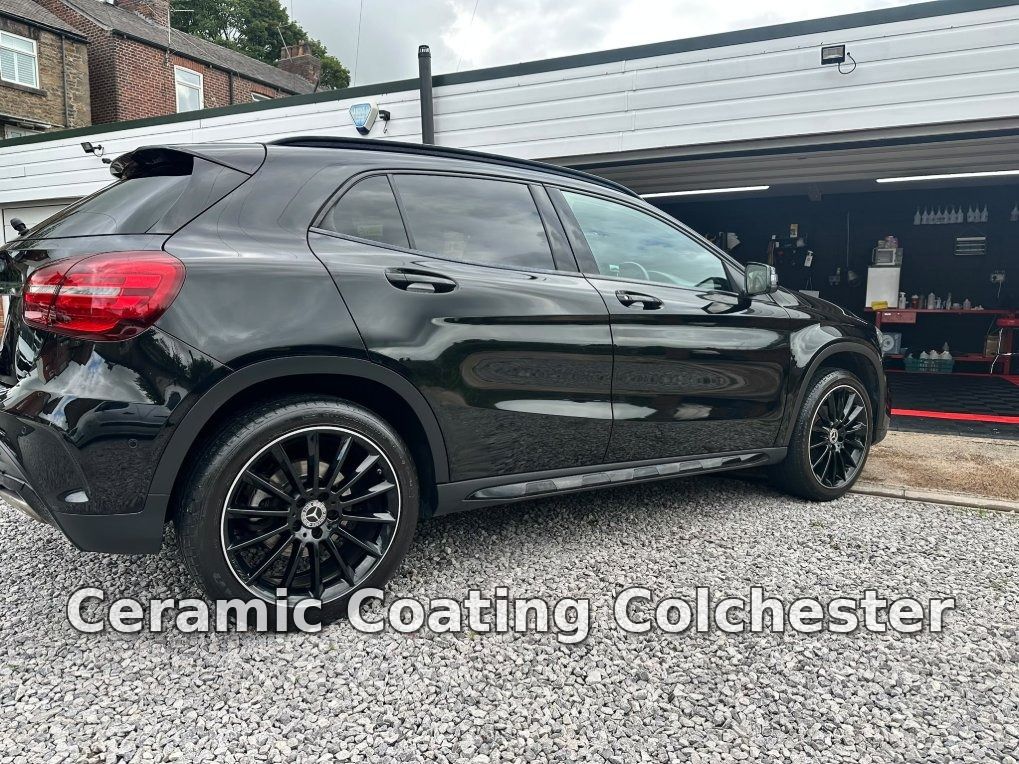
Car care near the Essex coast: salt air and sand
Salt air and sand are the two things that make coastal car care genuinely different. The good news: neither is mysterious — salt attacks exposed metal rather than sound paint, and sand only damages paint when it is wiped across it. A rinsing routine plus a healthy protective layer handles both, and this is one of the situations where ceramic coating earns its keep fastest.
We cover towns along the Essex coast — Mersea, Brightlingsea, Clacton and the surrounding villages are all within our service area — so this is written from the reality of salt air on the Blackwater and the Colne, not from a textbook.
For the wider picture, see our ceramic coating guide.
TL;DR
- Salt air accelerates corrosion at exposed metal (stone chips, scratched edges) — not at sound, intact paint.
- Salt film is invisible: rinse weekly at minimum for seaside-parked cars; wash every one to two weeks.
- Sand only damages paint when wiped. Rinse sandy panels thoroughly before anything touches them.
- Ceramic coating is high-value for coastal cars: salt releases easily instead of bonding.
- Touch in stone chips promptly — chips are where coastal corrosion starts.
What does salt air actually do to a car?
Salt air does not eat through healthy paintwork. Paint, clear coat and undamaged coatings are barriers, and salt sitting on an intact barrier is mostly inert. The damage happens at the weak points: stone chips that expose metal, scratched paint edges, bare fasteners, and the underside where stone chips accumulate invisibly.
Salt is hygroscopic — it attracts and holds moisture — so a salt deposit on a chip keeps that spot damp far longer than it would be otherwise. That persistent dampness, with salt acting as an electrolyte, accelerates corrosion. This is not rust blooming overnight; it is a chip edge creeping outward over months because the salt film was never rinsed away.
Two consequences follow. First, keeping the paint intact is the defence — which is why stone-chip repair matters more for coastal cars than inland ones. Second, the salt has to be removed: it does not wash off in the rain the way inland road dirt does. Only deliberate rinsing gets it off.
Where does the Essex coast hit hardest?
The specifics vary by where you park. A car garaged a mile inland faces far less than one parked overnight in an open seafront car park at West Mersea, or down by the Brightlingsea hard where spray comes over on a rough tide. Clacton's exposed seafront, the Mersea causeway at high tide, the unmade car parks above the beaches — these are the places where salt and sand arrive together, on the same day, on the same panels.
Sand is the local partner in crime. It ends up on the lower panels, in the sills, and inside the car. Sand itself is inert and harmless while it sits there — the damage comes at wash time: a dry cloth or a quick wipe "to get the dust off" drags those grains across the clear coat like sandpaper. Coastal wash damage is almost always sand damage, and it is almost always inflicted by the owner trying to be helpful.
How often should you wash a coastal car?
More often than inland — that is the honest headline. A practical rhythm for a car parked near the sea:
- Weekly rinse at minimum for cars parked within sight of the sea. This does not need to be a full wash: a thorough rinse with clean water, arches and sills included, removes the week's salt film.
- Full wash every one to two weeks, with proper technique — the two-bucket method from our wash guide applies here just as it does inland.
- After storms or visible sea spray, rinse as soon as practical. Salt driven in by wind and spray is the heaviest loading your car will see.
- After beach days, rinse the sandy panels before anything else. The sand removal is the priority; the wash can follow.
The principle is "little and often." Salt film builds invisibly, and by the time you can see it, it has been working for a while. A five-minute weekly rinse is worth more than a monthly marathon.
What is the safe way to deal with sand?
Sand handling is where coastal owners most often damage their own paint — with good intentions. The rules:
- Never wipe sandy paint dry. Not with a cloth, not with your sleeve, not with a "quick once-over." This single habit causes more coastal paint damage than salt ever will.
- Rinse first, thoroughly. A pressure washer or strong hose jet, worked from top to bottom, until the water runs clear and no grains are visible on the panels. Take your time with the lower doors, sills and arches — that is where the sand lives.
- Then wash normally. Only once the rinse water is clean should a mitt or cloth touch the paint.
- Keep a pump sprayer with water in the boot for beach days — enough to knock the worst off the sills and lower panels before the drive home.
- Do the interior too. Mats and boot liners earn their keep: sand inside grinds into carpets, wears sill trims, and holds salt dampness against metal edges. Shake mats out and vacuum regularly.
Does ceramic coating help for coastal cars?
Yes — and it is one of the situations where the case for a coating is clearest, because the problems it solves map directly onto the coastal ones:
- Chemical resistance. The coating blunts salt's attack on the clear coat, so the invisible film does less damage between washes.
- Salt releases easily. Instead of bonding to the paint, salt deposits sit on the slick surface and rinse away with the weekly rinse — the rinse actually works, instead of needing a scrub.
- Frequent washing becomes safer. Coastal cars need washing more often, and every wash is a chance to inflict damage. A coating makes each wash quicker, with less contact and less effort.
- UV resistance for cars parked in open seafront car parks, where the sun does its own slow work alongside the salt.
The honest caveat is the same as everywhere: the coating does not replace the rinsing routine. It makes the routine dramatically more effective and less risky. The coating is the multiplier; the routine is the base.
If your car lives near the sea and you are considering a coating, our mobile service covers the coastal towns as well as Colchester itself — we will assess the paint honestly, including the chips and edges that matter most.
The coastal car-care checklist
Pin this to the garage wall:
- [ ] Rinse weekly — clean water, arches and sills included, even when the car "looks clean."
- [ ] Wash fortnightly — pH-neutral shampoo, two-bucket method, dry afterwards.
- [ ] Rinse after storms and sea spray — the heaviest salt loading your car sees.
- [ ] Never wipe sand dry — rinse until the water runs clear before any cloth touches paint.
- [ ] Touch in stone chips promptly — chips are where coastal corrosion starts; seal them.
- [ ] Rinse the underside and arches — salt spray reaches everywhere, not just bodywork.
- [ ] Check seals and rubber trim — salt degrades rubber and uncoated plastics faster; keep them clean.
- [ ] Dry properly — Essex water is hard; air-drying leaves mineral spots on top of the salt.
- [ ] Keep the boot kit ready — pump sprayer with water, clean microfibres, for beach days and bird-lime emergencies.
- [ ] Consider a coating — it makes every item above quicker, safer and more effective.
Who this isn't for
If your car is garaged inland and only sees the coast on summer weekends, most of this does not apply to you — a normal wash routine and a rinse after beach trips is plenty. Do not let coastal anxiety sell you maintenance you do not need.
And if your car lives on the seafront but you know you will never adopt the weekly rinse, be honest about that. A coating will still slow everything down and make the washes you do manage far more effective — but the chips still need touching in, and the sand still needs rinsing before wiping.
Questions, answered honestly
Does sea air damage car paint?
How often should I wash a car parked near the sea?
Does ceramic coating help for coastal cars?
Is sand on the car a problem?
Ask us about your coastal car
If your car lives near the Essex coast and you want a straight answer on what its paint actually needs, talk to us. Call 07778 902278 or use the quote form.