How to wash a ceramic coated car: step by step
Washing a coated car is easier than washing an uncoated one — dirt releases readily — but the technique still matters. Bad washing is the fastest way to shorten a coating's life and reintroduce swirls. This is the routine we recommend to every customer, including the hard-water and winter-salt adjustments for Essex.
The why behind all of this is in our ceramic coating guide.
TL;DR
- Two-bucket method, pH-neutral shampoo, grit guards — the basics still apply.
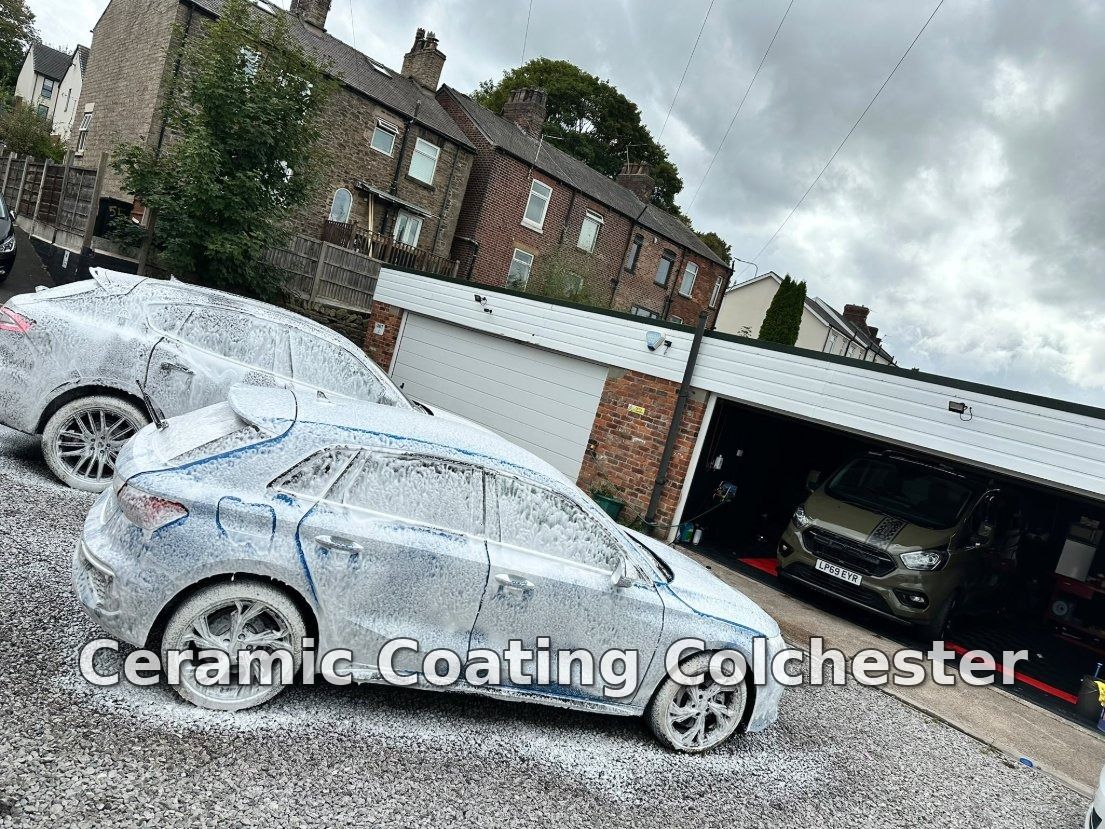
- Pre-rinse and snow foam first so you touch the paint as little as possible.
- Dry the car every time, especially in hard-water areas — never let it air-dry.
- Avoid brush car washes, washing-up liquid and strong chemicals.
- In winter, wash more often: road salt is the enemy.
What you'll need
- Pressure washer or hose, snow foam lance, pH-neutral car shampoo
- Two buckets with grit guards (wash and rinse)
- A quality wash mitt (not a sponge)
- Plush microfibre drying towel or car dryer
- Drying aid / quick detailer (optional but recommended)
- Separate wheel brush and wheel cleaner
The routine, step by step
1. Pre-rinse
Rinse the whole car thoroughly with the pressure washer or hose, working top to bottom. The goal is to remove loose dirt before anything touches the paint. Pay attention to sills, arches and the lower doors where grit collects.
2. Snow foam
Apply snow foam over the entire car and let it dwell for several minutes (follow the product's instructions — don't let it dry on). This softens and lifts road film so the contact wash has less work to do. Rinse off.
3. Wheels
Clean the wheels with a dedicated wheel cleaner and brushes before the bodywork, so brake dust doesn't splash onto clean paint. Rinse well.
4. Two-bucket contact wash
Fill one bucket with shampoo solution and one with clean rinse water, both with grit guards. Wash one panel at a time with the mitt, working top to bottom, rinsing the mitt in the rinse bucket before reloading shampoo. Light pressure — let the mitt and the coating's slickness do the work.
5. Final rinse
Rinse thoroughly, again top to bottom. If you have access to filtered or deionised water for the final rinse, this is where it earns its keep.
6. Dry — don't skip this
In much of Essex the water is hard, and air-drying leaves mineral spots etched onto the coating. Dry every panel with a plush microfibre towel, or blow the water off with a car dryer. A drying aid sprayed lightly as you dry adds lubrication and a small hydrophobic boost.
7. Quick check
Walk around the car. Bird droppings or bug splatter that survived the wash should be removed promptly with a damp microfibre — even on a coating, leaving them for weeks risks etching.
Hard-water tips for Essex
Much of Essex is a hard-water area, which means mineral spotting is the local hazard. Wash in the shade or on overcast days so water doesn't evaporate mid-wash, work panel by panel rather than soaping the whole car at once, and always dry immediately. If spotting does occur, a dedicated water-spot remover used promptly usually resolves it — left for months, spots can etch even through a coating.
The winter salt routine
From the first gritting to the last, road salt is constantly on the paintwork. Wash more frequently — salt left sitting is corrosive and will degrade any protection over time. Pay extra attention to the lower third of the car, sills and arches, and rinse the underbody if you can. A coated car makes this dramatically easier: salt releases from the slick surface with far less scrubbing than bare paint.
Mistakes that shorten coating life
- Brush-type automatic car washes — the single fastest way to degrade a coating.
- Washing-up liquid or harsh degreasers — strips protection; use pH-neutral shampoo.
- Washing in direct sun — products dry on the paint and water spots form instantly.
- One bucket, no grit guard — you're just sanding the paint with its own dirt.
- Leaving bird droppings for weeks — coatings resist etching, they're not immune to it.
- Aggressive traffic film removers used neat — strong chemicals used carelessly will dull any coating.
If you'd rather not do it yourself, our mobile service covers maintenance washes across Colchester and parts of Essex.
Drying aids and maintenance toppers
Two products worth knowing about once the basics are second nature:
- Drying aids — sprayed lightly onto wet panels before drying, they add lubrication (reducing the chance of wash-induced marks) and leave a small hydrophobic boost. Use one every wash; it takes seconds and genuinely helps.
- Maintenance toppers — spray sealants designed to refresh the coating every few months. Applied to a clean, dry car, they restore sharp water behaviour and add gloss. They're maintenance, not miracles — they refresh a healthy coating, they don't resurrect a dead one.
Stick to products compatible with your coating — ideally from the same manufacturer. Your installer should have told you which ones at handover; if not, ask.
Washing when it's freezing
Essex winters raise a practical problem: you need to wash off road salt, but it's near freezing and the hose might be iced up. Some honest pragmatism:
- Pick the warmest part of the day and work quickly — don't let water sit and freeze on panels.
- A rinseless wash (used correctly, with plenty of plush towels) is a legitimate winter option when a full hose wash isn't practical. It's not as safe as a proper two-bucket wash, but it's far better than leaving salt on for weeks.
- Never pour hot water on a frozen car — thermal shock can crack glass and damage trim.
- Dry thoroughly — door seals, fuel flap, mirrors. Frozen-shut doors are miserable.
- If it's truly arctic, a touchless wash is an acceptable stopgap until you can do it properly.
The principle doesn't change in winter: salt off the car as often as practical, with the safest method the conditions allow.
Who this isn't for
If you're committed to the brush car wash on the forecourt and nothing will change that, be honest about it — a coating will still help, but you'll never see its full lifespan. And if the idea of a seven-step wash sounds like a chore you'd never do, a simpler sealant-and-valet routine might suit your life better than a coating you'd neglect.
Questions, answered honestly
Can I use a pressure washer on a ceramic coated car?
How often should I wash a ceramic coated car?
Can I take a ceramic coated car through an automatic car wash?
What shampoo should I use on a ceramic coating?
Do I need to dry the car after washing?
Get an exact quote for your car
A coating makes every future wash faster and safer — and we'll show you exactly how to look after it at handover.
Call 07778 902278 · Request a quote