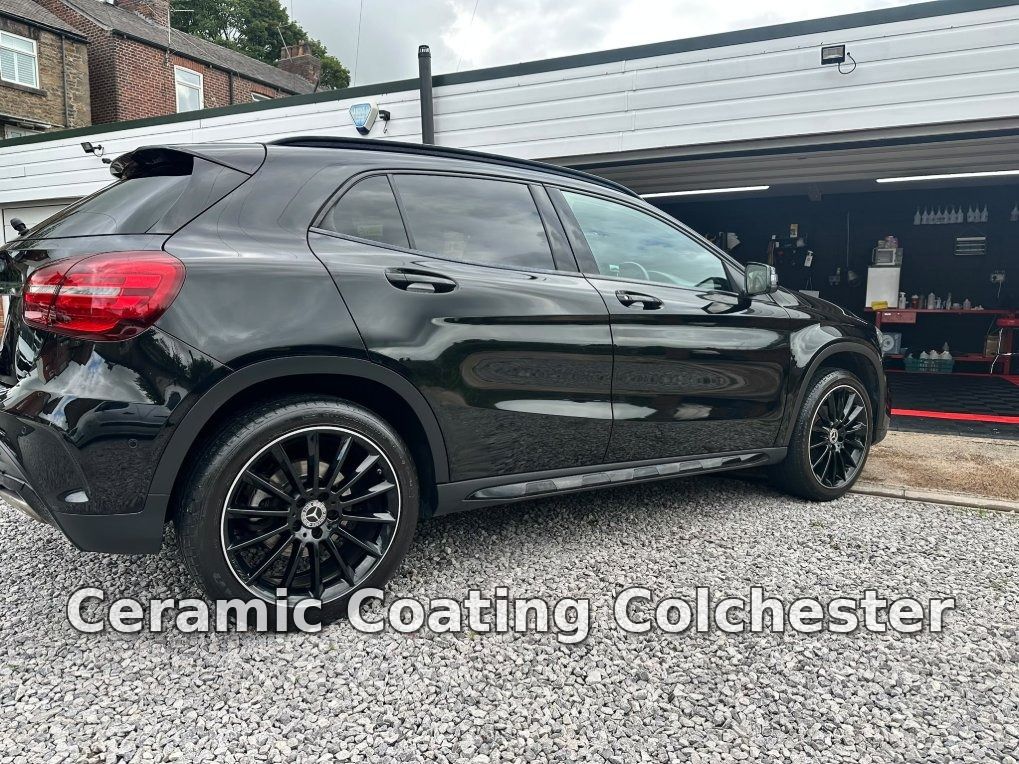
Bird droppings and tree sap on ceramic coating
Bird droppings and tree sap are the two contaminants most likely to spoil an otherwise healthy coating — not because they defeat it, but because they tempt owners into ignoring them ("the coating will handle it") or attacking them aggressively ("it's stuck, so I'll scrape it"). A coating buys you a grace period measured in days, not hours — but removal still needs to be gentle.
Our ceramic coating guide covers coatings in general; this article is about the two contaminants and exactly how to deal with them.
TL;DR
- Bird droppings are acidic and etch paint as heat bakes them in; tree sap hardens into a resin that bonds to the surface.
- On bare paint, etching can start within a day in summer sun; a coating pushes that out to days, but does not eliminate it.
- Safe removal is always: soften first, lift gently, rinse — never scrape or scrub dried deposits dry.
- Keep water and clean microfibres in the boot so "prompt" is actually possible.
- Bug splatter follows the same rules.
Why do bird droppings damage paint so quickly?
Bird droppings are acidic, and the damage they do is a function of heat and time. The warmer the panel, the faster the acid attacks the clear coat — a dropping on a hot bonnet at midday is chemically active in a way the same dropping on a cool evening isn't.
Three things work against you at once: the acidity itself (uric acid, corrosive to paint); the texture (droppings often contain grit — seeds, shell fragments — so a dried dropping is an abrasive lump glued to your paint); and the way the dropping contracts and bonds as it bakes and hardens, which is why a day-old dropping needs softening rather than wiping.
On uncoated paint, etching can genuinely happen within a day in summer. It is the most common source of the dull, etched ghost-marks we see on cars that come in for paint correction — and one of the real, honest reasons people choose a coating: not because it makes droppings irrelevant, but because it changes the timeline from "today, urgently" to "within the next few days."
How does tree sap differ from bird droppings?
Tree sap is a different problem with a similar lesson. Where droppings are acidic and corrosive, sap is a sticky resin that hardens as it cures. It doesn't chemically attack the paint the way acid does — it bonds to it, mechanically. A fresh sap droplet wipes off easily. Sap that has been baking for a week under a lime or pine tree has essentially become glue.
The common UK sources: lime trees (the sticky summer "honeydew" is actually aphid excrement, but the removal advice is identical), pines and conifers (true resin, tougher to shift), and horse chestnuts in autumn. Unlike droppings, sap doesn't usually etch — but it traps other contamination against the paint and can stain light-coloured cars if left long enough. The fix is the same family of methods, with the emphasis on "remove before it becomes permanent."
What does ceramic coating actually change?
A ceramic coating changes both the chemistry and the timeline. The contaminant lands on the coating layer rather than the clear coat directly, and coatings are chemically harder and more resistant than clear coat — so acid needs far longer to make any impression, and bonded deposits release from the slick, low-surface-energy finish far more easily.
In practice, on a coated car:
- A fresh dropping often rinses off with plain water — something that would need claying on bare paint.
- Hardened sap lifts after a short dwell with a damp cloth, where uncoated paint might need a tar remover and patience.
- The "must deal with it today" window becomes a "deal with it in the next few days" window.
That last point is the honest one to dwell on. A coating is not a force field. Droppings left baking for a week in a heatwave can still mark the coating itself — the difference is that a mark in the coating is shallower, often correctable, and usually avoids the clear coat entirely, whereas the same neglect on bare paint writes the etching into the paint itself.
How do I safely remove bird droppings from a coated car?
- Get the deposit wet. A bottle of water poured over it is perfect, or a gentle hose rinse. The goal is to soften and saturate the dropping — never wipe a dry one.
- Dwell, don't scrub. Lay a damp microfibre cloth over the spot for a few minutes; the cloth holds moisture against the dropping and does the softening work for you.
- Lift, don't drag. Fold the cloth to a clean section and lift the softened dropping straight up and away. If it resists, re-wet and wait.
- Rinse the area with water to clear any residue, and give the spot extra attention at the next proper wash.
- Check your work. Once dry, look at the spot in good light. A faint ghost of the dropping should be dealt with now, not in a month.
What not to do: scrape with fingernails, credit cards or any hard tool; scrub a dried deposit with a dry cloth; or leave a quick detailer to "dissolve" the dropping for hours in the sun. The detailer is a lubricant for removal, not a substitute for it.
How do I remove hardened tree sap?
Hardened sap needs the same soften-first philosophy:
- Warm water dwell. Soak a microfibre in warm (not hot) water, wring it lightly, and lay it over the sap for five to ten minutes — softening beats scrubbing every time.
- Lift gently. After dwelling, the sap should peel or wipe away with light pressure. Work at the edges of the blob rather than grinding at its centre.
- Repeat rather than escalate. Two or three gentle cycles beat one aggressive one. Sap that has been there for weeks may need several attempts — that is normal.
- For genuinely stubborn spots, a coating-safe tar remover used sparingly on a fully cured coating is acceptable. Apply to the cloth, work gently, and rinse thoroughly afterwards.
- Never use razor blades, scouring pads, petrol, acetone, or aggressive solvents. If sap has been curing for months and will not shift, a detailer with machine-polishing experience can deal with it — this is the sort of thing our mobile maintenance visits handle routinely.
Do all of this in the shade or on a cool panel. Sun-heated paint makes every chemical more aggressive and dries water out before it can dwell.
How long can I really leave it?
| Situation | Grace period |
|---|---|
| Dropping on a cool, overcast day | A few days — but sooner is still better |
| Dropping on a hot, sunny panel | Hours to a day; treat it as urgent |
| Fresh tree sap, cool weather | Days — easy to remove while fresh |
| Baked-on sap under a lime tree in August | Remove daily if you park there; it accumulates |
| Bug splatter, summer evening | Overnight is fine; beyond a day or two it hardens |
Rules of thumb, not guarantees: dark cars in sun run hotter, and an older coating resists less than a fresh one. When in doubt, remove it now — the safe method takes five minutes.
The boot kit: what to carry
The gap between "I should remove that promptly" and "I actually did" is usually logistics. Keep this in the boot:
- A one-litre bottle of water (refilled when you remember)
- Two or three clean microfibre cloths in a sealed bag
- A small spray bottle of coating-safe quick detailer for lubrication
Water, patience, and a soft cloth — that is the entire method.
Who this isn't for
If you are expecting the coating to make contamination maintenance-free, adjust the expectation now: a coating makes maintenance easier, not unnecessary. It turns a panicked daily chore into a relaxed few-minutes-twice-a-week habit — which is the whole point.
And if your car lives under a lime tree all summer and you know you will never touch it between washes, be honest about that too. The coating still buys the paint meaningful protection — but the coating rewards some effort, and the eventual clean will be harder without it.
Questions, answered honestly
Will bird droppings damage ceramic coating?
How do I safely remove tree sap from a coated car?
What should I keep in the car for emergencies?
Is it safe to use a quick detailer on bird droppings?
Ask us about your car
If you are weighing up a coating for a car that lives under trees or doubles as a seagull target, tell us — we will give you a straight answer. Call 07778 902278 or use the quote form.