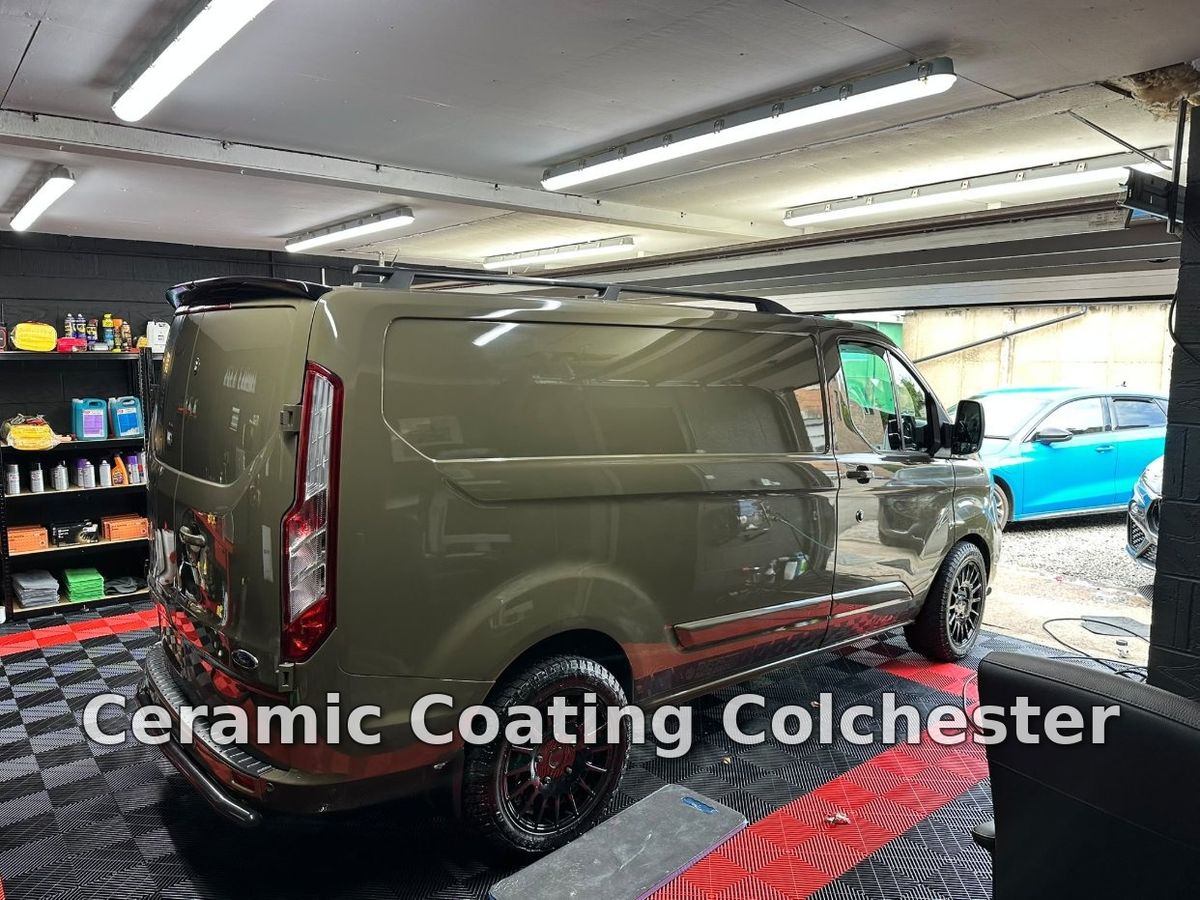
Ceramic coating for caravans and motorhomes
Yes, caravans and motorhomes can be ceramic coated — and for vehicles that live outdoors and take hours to wash, the benefits are arguably greater than for a car. But it is a specialist job: mixed surfaces, serious size, and working at height all need proper handling. If you're unfamiliar with coatings, our plain-English introduction to ceramic coating is the right place to start.
TL;DR
- The same coating chemistry works on caravan and motorhome surfaces.
- Surfaces are mixed: painted aluminium, GRP gel coat, plastics, decals — each needs its own approach.
- Size means more labour and more product; expect pricing to reflect that, not car pricing.
- We handle larger vehicles — see our vans and SUVs page — and every job starts with an honest assessment.
- Always get a specific written quote; never extrapolate from car prices.
Can caravans and motorhomes actually be coated?
Yes. There is nothing exotic about the chemistry involved — ceramic coatings bond to painted aluminium and gel coat just as they bond to automotive clear coat. Larger vehicles are firmly part of what we do: our ceramic coating service for vans and SUVs exists precisely because bigger vehicles need a different logistical approach, and caravans and motorhomes extend that same thinking further.
What makes them a specialist job is the combination of factors, not any single one. The surfaces are mixed rather than uniform. The sheer area means preparation alone can take as long as a full car detail. Working height needs proper equipment — ladders and reach systems, not improvised perches. And decals, graphics, and seals complicate application in ways a car rarely does. None of this is a reason not to coat; it is the reason to use someone who has thought it through rather than someone treating your motorhome like an oversized hatchback.
What surfaces does a caravan actually have?
A typical caravan or motorhome is a patchwork, and each material behaves differently:
| Surface | What it needs |
|---|---|
| Painted aluminium panels | Coats much like car paint; check for oxidation and chalking first |
| GRP / fibreglass gel coat | Oxidises differently from clear coat; needs gel-coat-appropriate preparation |
| ABS plastic trims and skirts | Trim-specific approach; adhesion varies by plastic type |
| Decals and graphics | Coat over or mask around — a discussion, not an assumption |
| Windows, rooflights, and seals | Glass treatments where suitable; never coat seals themselves |
| Roof | Often the most weathered area; assess before committing |
Gel coat deserves a special mention. It oxidises into a chalky, faded layer that looks tired but is very restorable — however, it needs different preparation from automotive paint, and heavily oxidised gel coat may need restorative work before coating is even on the table. An honest installer will tell you when preparation has crossed from "prep" into "restoration," because the two are priced and planned differently.
Why do caravan owners consider coating?
Because washing a caravan is a genuine chore, and anything that makes it easier pays for itself in saved weekends. A large motorhome can take the best part of a day to wash properly by hand — ladders, long brushes, and a lot of rinsing. On a coated surface, grime releases far more readily, so the same wash becomes quicker, needs less aggressive contact, and uses less water.
UV resistance is the second big reason. Caravans and motorhomes spend most of their lives parked outdoors — on driveways, in storage compounds, on pitches — and constant sun exposure fades gel coat, chalks paint, and degrades decals. A coating adds a sacrificial layer taking that punishment instead. For Essex owners, coastal air adds its own film of salt and grime, and winter storage means months of damp stillness where algae and black streaks take hold. Those black streaks — grime washing down from roof edges and awning rails — are the bane of caravan ownership, and they wipe off a coated surface dramatically more easily than an uncoated one. Finally, there's the asset argument: caravans and motorhomes are high-value purchases, and a well-kept exterior protects resale value in a way buyers can see immediately.
What makes it a specialist job?
Size, first and honestly. A motorhome can present three or four times the surface area of a car, and every stage — washing, decontamination, preparation, application, curing checks — scales with it. More product, more labour, more time. Anyone quoting you car money for a motorhome either hasn't understood the job or plans to rush it.
Access and working height come next. Roofs, overcab sections, and high sidewalls need proper platforms or scaffolding — safe, stable, and positioned not to mark the vehicle. Then there are the decals: many caravans carry extensive graphics, and the decision to coat over them or mask around them depends on their age, condition, and adhesion. Old, lifting decals should not be coated over; that's a conversation to have during assessment, not a surprise on the day. And the mixed surfaces mean the job can't be one product applied uniformly — painted panels, gel coat, and trim each get the treatment suited to them.
How should you think about cost?
Without figures — because honest pricing depends on your specific vehicle — think in terms of what drives the cost: total surface area, surface condition (oxidised gel coat needs more preparation), decal complexity, and access requirements. A compact two-berth caravan and a tag-axle motorhome are entirely different jobs, and any meaningful quote has to be based on seeing the vehicle or at least detailed photos and measurements.
What you should not do is extrapolate from car coating prices. What you should do is ask for a written quote that itemises preparation versus coating, states which surfaces are included, and sets out any maintenance expectations. That written quote is also your protection: it forces specificity on both sides. If an installer won't put it in writing, that's information too.
Studio or mobile appointment?
This depends on the vehicle and the work needed. Our studio at Hythe Quay in Colchester offers a controlled environment — valuable for application and curing — but not every caravan or motorhome can or should travel to a studio. Our mobile service across Colchester and parts of Essex exists for exactly this kind of situation: the work happens where the vehicle lives, whether that's your driveway or its storage location. Discuss it when you enquire — the right answer depends on your vehicle's size, its storage situation, and the time of year.
Who this isn't for
If the gel coat is heavily oxidised and you're not prepared to pay for the restorative preparation it needs first, coating now would be money poorly spent — restoration first, protection after. If the caravan is destined for years of untouched storage under trees with no washing at all, be realistic: a coating slows degradation dramatically but doesn't suspend it. If decals are already lifting and peeling, they need addressing before anyone talks about coating over them. And if what you want is a cheap, quick job priced like a car — walk away from anyone offering it, including us. The honest version of this service costs what it costs because of what it involves.
Related reading
Questions, answered honestly
Can you ceramic coat a caravan or motorhome?
What surfaces do caravans have?
Is it worth coating a caravan?
Will coating stop black streaks on my caravan?
Ask us about your caravan or motorhome
Every caravan and motorhome is a different job, so every quote starts with a proper look at the vehicle. Request a quote or call 07778 902278 — tell us what you've got and where it lives, and we'll give you an honest assessment and a written quote.