Ceramic coating cure time: what to expect in UK weather
The direct answer: most professional ceramic coatings are touch-dry within hours, resist water within a day or two, and fully cure over one to two weeks — slower in cold, damp UK weather. For the background on what curing actually is, see our ceramic coating guide.
TL;DR
- Hours: coating is touch-dry; do not touch it.
- 1–2 days: initial water resistance; keep it dry if you can.
- 1 week: first careful wash allowed with pH-neutral shampoo.
- 1–2 weeks: full cure; normal use resumes, coating at full hardness and chemical resistance.
- Cold and damp slow everything down — a heated studio matters.
The cure timeline
| Stage | Typical timing | What it means | Your rules |
|---|---|---|---|
| Application and levelling | 0–2 hours | Coating is wet and being levelled | Do not touch; car stays indoors |
| Touch-dry | A few hours | Surface is dry to a light touch | Still no contact, no water |
| Initial cure | 1–2 days | Water-resistant but not fully hard | Keep dry if possible; avoid rain, sprinklers, bird droppings |
| Wash-safe | Around 1 week | Hard enough for a careful wash | pH-neutral shampoo only, gentle technique |
| Full cure | 1–2 weeks | Full hardness and chemical resistance | Normal washing resumes; decontamination products now safe |
Timings vary by product — always follow your installer's specific aftercare sheet rather than generic advice.
Why UK weather complicates curing
Ceramic coatings cure through a moisture-triggered chemical reaction (cross-linking). That reaction needs sensible temperatures to proceed at the intended rate. A cold, damp British winter slows it noticeably; a warm, dry spell speeds it. This is practical, not theoretical:
- Winter applications need a heated environment — a studio with controlled temperature, not a driveway in January.
- Humidity is a double-edged sword: the reaction needs some moisture, but standing water or heavy condensation on a fresh coating can cause water-spotting during the cure window.
- Summer heat shortens flash times during application itself, which is the installer's problem to manage, not yours.
The rules that actually matter
First 48 hours: keep it dry. This is the single most important instruction. Rain, hose water, and sprinkler spray can all mark a curing coating. A studio-kept car sidesteps this entirely.
First week: no washing, no chemicals. No shampoo, no snow foam, no detailing sprays unless your installer specifically approves them. Bird droppings during this window should be removed gently with water and a soft cloth — then tell your installer.
First two weeks: be gentle. Avoid automatic car washes entirely (you should avoid them permanently on a coated car), skip aggressive cleaners, and do not apply waxes or sealants over the fresh coating.
What if it rains unexpectedly?
Do not panic. Light rain after the initial cure period is unlikely to cause lasting harm — the risk is water spots from mineral-heavy water sitting on the surface. If the car gets wet during the cure window, let it dry naturally rather than wiping it (wiping a soft, curing coating causes marring), and mention it to your installer at your check-up.
Studio vs mobile vs driveway: how setting affects the cure
Where the coating cures matters almost as much as how it is applied:
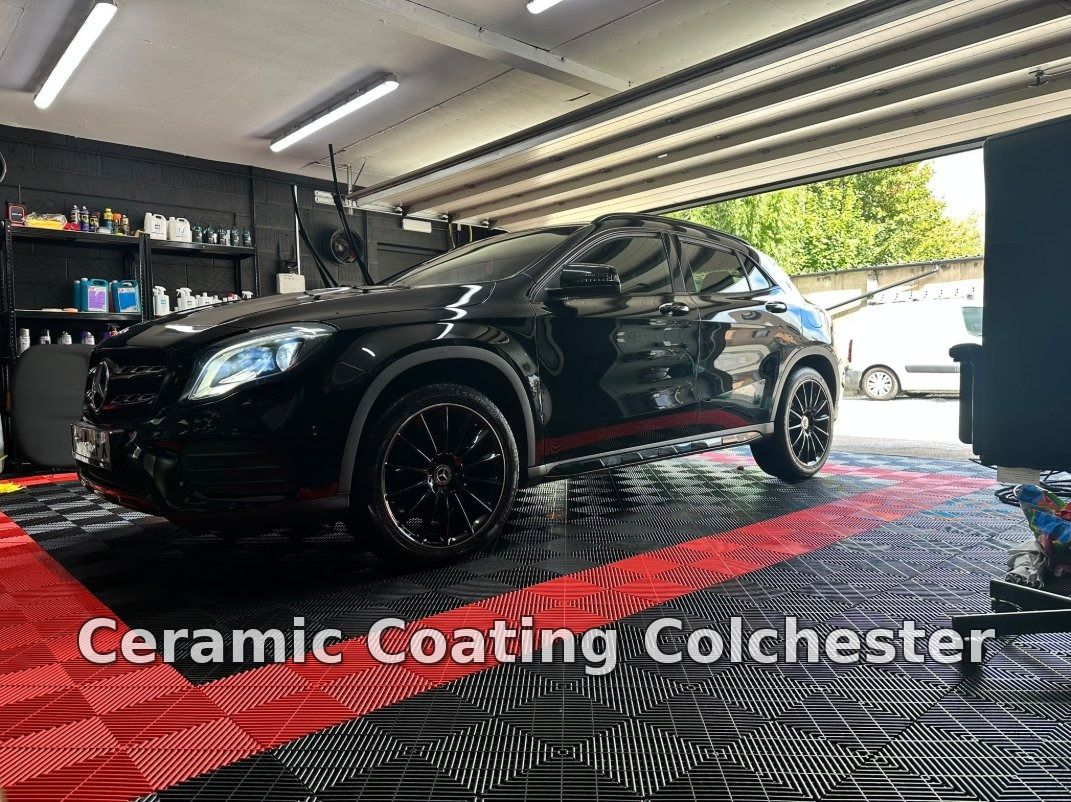
- Studio — the ideal: stable temperature, filtered air, no rain, no dust, no bird droppings. The car sits undisturbed for the critical first day or two. This is the strongest practical argument for studio application in the UK.
- Mobile (at your address) — workable in fair weather with a sheltered spot. The risk is the uncontrollable: an unexpected shower, overnight condensation, or dust during the cure window. A good mobile installer will be honest about weather calls and reschedule rather than gamble.
- Driveway DIY — the hardest setting: no temperature control, no dust control, and the car usually needs to be driven before the cure completes. If you go this route, choose the mildest, driest forecast window you can and keep the car garaged or covered for the first 48 hours if at all possible.
Whatever the setting, the rules are the same — keep it dry, keep it untouched, and be patient. The coating will reward you for it for years.
Why studio application wins here
This is one of the strongest practical arguments for professional application in the UK: the car cures indoors, at a stable temperature, away from rain, dust, and bird droppings, for the critical first day or two. A mobile or DIY application done well can still succeed — but the weather is an uninvited participant in the process.
Related reading: ceramic coating process, how to wash a ceramic coated car, ceramic coating and winter road salt.
Questions, answered honestly
How long does ceramic coating take to cure?
Can I drive my car in the rain after ceramic coating?
When can I wash my car after ceramic coating?
Does cold UK weather slow down ceramic coating curing?
Get an honest answer for your car
The right choice depends on your car's paint condition, how you use it, and what you expect protection to do. Call 07778 902278 or use the quote form — if ceramic coating isn't right for your car, we'll tell you that too.