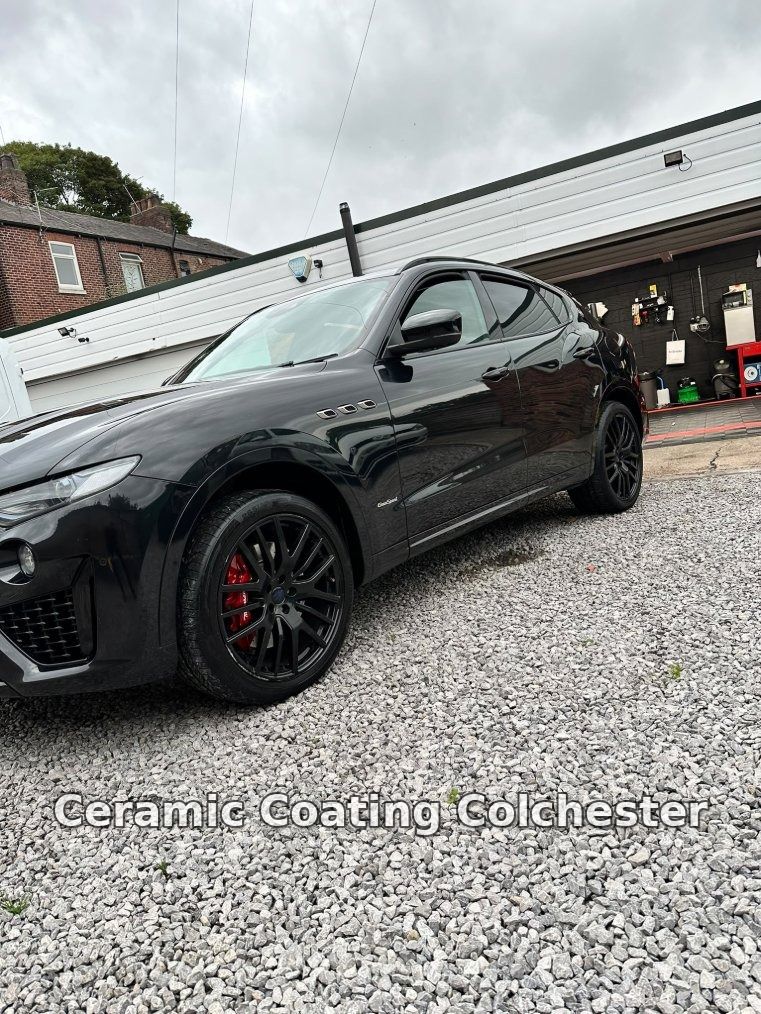
Ceramic coating vs PPF: which protects paint better?
It depends what you're protecting against. Ceramic coating is a chemical layer bonded to the paint — it boosts gloss, sheds water and resists chemical staining. PPF (paint protection film) is a physical, self-healing polyurethane film — it absorbs stone chips and light impacts. For shine and easy washing, coating wins; for impact protection, PPF wins. Here's the full comparison.
New to coatings? Our ceramic coating guide covers the basics.
TL;DR
- Coating = chemical protection (gloss, hydrophobics, stain resistance). PPF = physical protection (chips, scratches, impacts).
- A coating will not stop stone chips. PPF will not make washing dramatically easier on its own.
- PPF generally costs more — it's far more labour-intensive to install.
- The premium answer is both: PPF on high-impact areas, coating over everything.
- Installer skill matters enormously for both, but especially for PPF.
The comparison
| Ceramic coating | Paint protection film (PPF) | |
|---|---|---|
| What it is | Liquid polymer cured into a hard layer | Physical polyurethane film applied to panels |
| Stone-chip protection | None — too thin to absorb impacts | Excellent — the film takes the hit |
| Scratch resistance | Minor resistance to fine marring | Good — quality films self-heal light marks with heat |
| Gloss | Deepens gloss noticeably | Optically clear; adds a little depth, less than coating |
| Water behaviour | Strong beading and sheeting | Modest on its own — transforms with a coating on top |
| Chemical resistance | Excellent against salt, bird lime, fallout | Good physical barrier; chemicals sit on the film |
| Maintenance | Easier washing; needs proper technique | Wash normally; edges need care |
| Lifespan | Wears gradually; maintenance extends it | Long-lived if installed well; can yellow if poor quality |
| Cost | Less — mostly preparation labour | More — material plus highly skilled fitting labour |
| Reversibility | Removed by machine polishing | Peeled off by a professional |
When ceramic coating is the right choice
- You want maximum gloss and the easiest possible washing routine.
- Your main enemies are road salt, bird droppings, tree sap and water spotting — chemical and contamination threats.
- Your driving is mostly town and A-roads at moderate speeds, where stone chips are less of a hazard.
- Budget matters: a full professional coating costs less than a full PPF installation.
When PPF is the right choice
- Stone chips are your number one concern — heavy motorway mileage, rural roads, following lorries on the A12.
- You want a physical barrier against light scratches, scuffs and car-park encounters.
- You're protecting a high-value or cherished car where paintwork condition really matters.
- You're happy to pay more for the only product that genuinely absorbs impacts.
The combination: PPF where it counts, coating everywhere
This is what we'd recommend for owners who want the complete answer: PPF on the high-impact areas — front bumper, bonnet leading edge, wings, mirrors, and sometimes sills and door edges — with a ceramic coating applied over the whole car, film included. You get impact protection where stones hit, plus the gloss, hydrophobics and easy washing of a coating everywhere. It's the most complete protection package available, and it's more affordable than full-vehicle PPF.
We fit and coat both — see our PPF page for the film side of what we do.
Can you ceramic-coat matte PPF?
Yes — with the right product. Matte and satin PPF exist specifically to give paintwork a flat finish, and coating them with a standard gloss-enhancing ceramic would partially defeat the purpose. Coating manufacturers make matte-safe versions that preserve the flat look while adding hydrophobics and easier washing. The key points: confirm the coating is rated safe for matte film, and confirm your PPF installer is happy with the plan — some film warranties have views on what goes on top.
Don't coat matte or satin paint (factory matte finishes) without specialist advice either — matte paint can't be machine-polished in the conventional way, so the preparation stage needs a different approach entirely.
Which one copes better with automatic car washes?
Neither copes well with brush-type automatic washes, to be blunt. On a coating, the brushes degrade the layer and reintroduce swirls. On PPF, the brushes can lift edges, trap grit against the film and dull the finish — and scratched film is far more conspicuous than scratched coating. Touchless washes are the lesser evil for both, but they're not a routine either of us would recommend as your primary method.
If automatic washes are non-negotiable in your life, PPF has one advantage: light damage to film can sometimes be self-healed with heat, and a damaged panel of film can be replaced without redoing the whole car. A degraded coating needs machine polishing and reapplication. But the real answer is the same for both: proper hand washing is part of the deal.
The cost question, answered qualitatively
We don't publish prices, and we won't pretend there's a universal figure — but the qualitative comparison is straightforward. A professional ceramic coating is primarily preparation labour plus a modest product cost. PPF is preparation labour plus highly skilled fitting labour (every panel is cut, positioned, squeegeed and trimmed by hand) plus an expensive material. Full-vehicle PPF typically costs a multiple of a full coating.
That's why the combination approach is popular: PPF on the high-impact zones where it earns its keep, coating over everything for gloss and easy washing. You get most of the benefit of both for meaningfully less than full-vehicle film. When you ask us for a quote, tell us how you use the car and we'll recommend the honest balance — not the most expensive option.
Who this isn't for
If neither stone chips nor concours gloss keep you up at night, you don't need either product — a quality sealant and a good wash routine will serve you perfectly well for a fraction of the outlay. And if anyone tells you one product makes the other obsolete, they're selling, not advising: coating and PPF solve different problems, and honest installers say so.
Questions, answered honestly
Which is better, ceramic coating or PPF?
Can you put ceramic coating over PPF?
Is PPF more expensive than ceramic coating?
Does PPF change how the car looks?
Do I need PPF if I have ceramic coating?
Get an exact quote for your car
Coating, PPF, or the combination — tell us how you use the car and we'll recommend honestly, then quote in writing.
Call 07778 902278 · Request a quote